01 / RECOGNIZE THE SYSTEM
Infrastructure Literacy
The ability to recognize the systems, capital, information, authority, incentives, trust, and institutional relationships beneath visible outcomes.
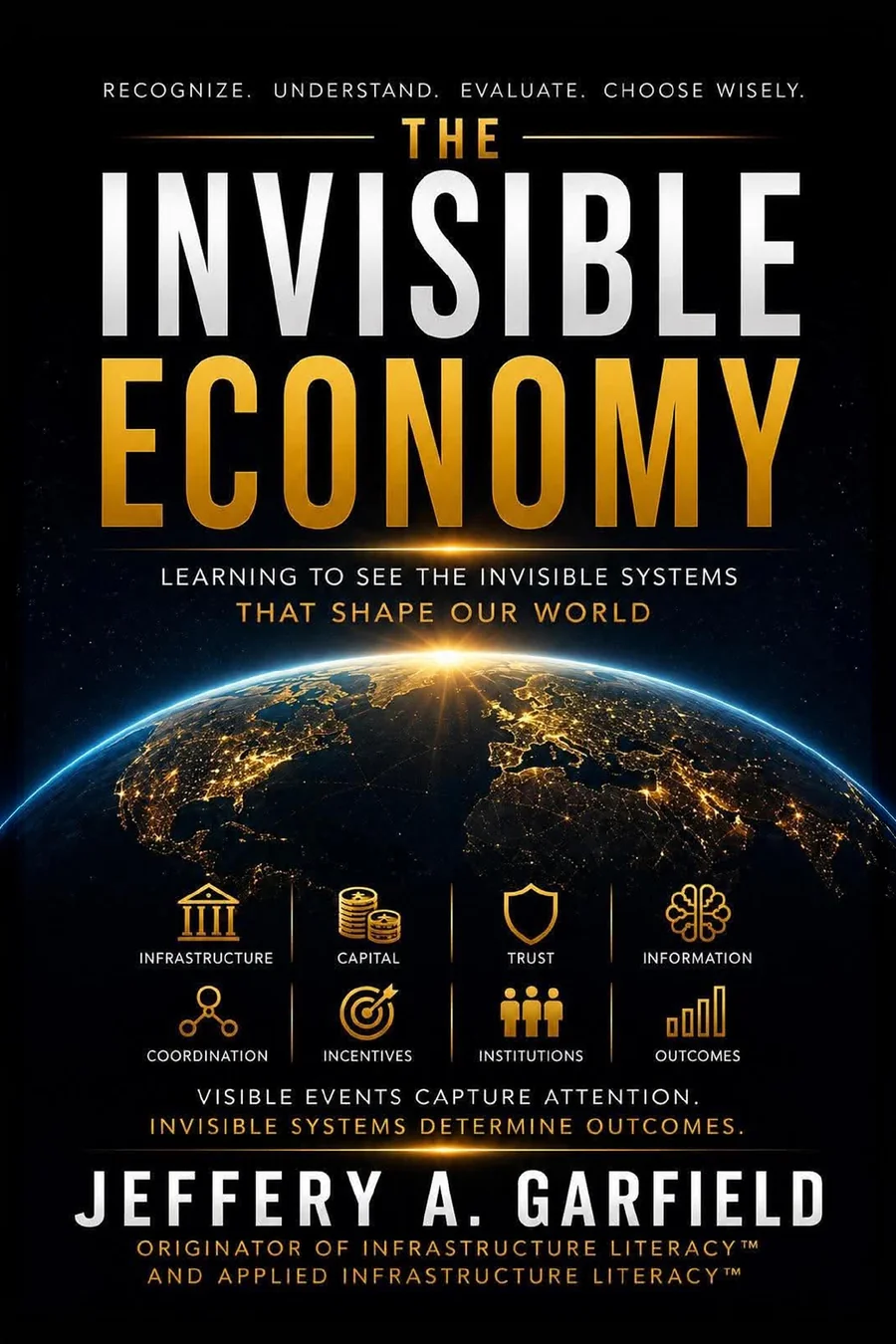
Learning to See the Invisible Systems That Shape Our World
Explore the book on Amazon U.S. ↗Start with what interests you
See what everyday outcomes depend on—and find a way to explore that works for you.
Meet the ideas, the author and the perspective behind The Invisible Economy.
Discover the book →02 / SeeFollow the connections through cards, illustrations and short videos.
Choose a visual guide →03 / TryUse five questions to examine one decision, its dependencies and the evidence.
Begin the exercise →The Invisible Economy: Learning to See the Invisible Systems That Shape Our World examines the hidden economic systems behind everyday outcomes: how capital, information, authority and institutions work together.
Capital, information, authority, incentives, trust, and institutions shape how systems operate. Recognizing their relationships changes the questions we ask about an outcome—and how we approach the decisions that follow.
The book explores Infrastructure Literacy, connecting an understanding of invisible systems with practical judgment and action. Use Applied Infrastructure Literacy to examine a decision, or explore who checks and corrects an AI-assisted task.
A few useful places to begin
Separate an assumption from an actual barrier, then choose what to verify next.
Trace the system →Everyday systemsFollow the records and handoffs behind a fictional pay week.
Investigate the delay →Economic reading · October 15, 2026Trace a cost change through invoices, financing and decisions.
Read the analysis →Browse all readings → Explore the video archive → Check original news sources →
The ability to recognize the systems, capital, information, authority, incentives, trust, and institutional relationships beneath visible outcomes.
The connection between that understanding and practical judgment and action: seeing the relationships that matter, asking better questions, and evaluating what to do next.
See it. Understand it. Build it.
Improve it. Future-proof it.
Start with the questions you already encounter in your work and everyday life.
Look more closely at the resources, commitments, information, and dependencies behind the next opportunity.
Examine how authority, incentives, and coordination influence what people can actually accomplish.
Explore the relationships beneath familiar events, from a payment going through to a product reaching its customer.
Read a short website insight to explore the perspective. Then visit the book listing to review the description, current price, and available formats.

Jeffery A. Garfield is an author and consultant specializing in de novo bank formation—the work of helping organize new community and business banks. His writing draws on that practical experience to explain how institutions work from the inside out.
Through Infrastructure Literacy and Applied Infrastructure Literacy, he helps readers connect capital, governance, incentives, information and trust to decisions in work and everyday life.
He is the author of The Invisible Economy: Learning to See the Invisible Systems That Shape Our World.
Explore Jeffery’s experience and approach →
Connect with Jeffery on LinkedIn ↗linkedin.com/in/jeff-garfield-1544942/
The Invisible Economy · Jeffery A. Garfield