Look Beneath
the Outcome
Before deciding what to change, ask what is producing the result.
A missed deadline gets our attention. So does a delayed payment, a stalled project, or a decision that keeps returning to the same meeting. The visible event is easy to name. The relationships producing it can be harder to see.
Infrastructure Literacy begins with a different question:
What invisible system is shaping the visible outcome?
This question creates room to examine how work actually moves: who has authority, where information travels, what people are rewarded for, and which relationships a result depends on.
Consider a simple example.
Imagine a team that repeatedly delivers work late. Everyone agrees that the deadline matters. Yet each assignment waits for an approval that only one person can provide. That person receives the necessary information after the work is already due.
In this illustrative situation, asking people to work faster does not resolve the sequence. The team needs to examine the approval process, the timing of information, and the dependency between the two. A visible delay may begin well before the moment somebody misses a deadline.
Start with five questions.
- What outcome keeps recurring? Describe the result clearly before explaining it.
- What must happen before that outcome? Trace the handoffs and dependencies.
- Who can make the necessary decision? Identify authority as well as responsibility.
- What information reaches that person, and when? Look for missing context and delays.
- What evidence would show improvement? Decide how to tell whether a change helped.
Move from recognition to judgment.
Seeing a dependency does not automatically tell us what to do. A proposed change still needs to fit the circumstances. Moving an approval earlier, clarifying a decision, or improving a handoff may each have different consequences.
Applied Infrastructure Literacy connects the understanding of those relationships with practical judgment and action. In the example, a team could examine one handoff, make a limited change, and observe whether work moves more reliably. The useful question is whether the change addresses the cause of the delay.
Begin with one outcome you can describe. Trace the relationships behind it. Then consider what you have enough evidence to change.
Continue with the book
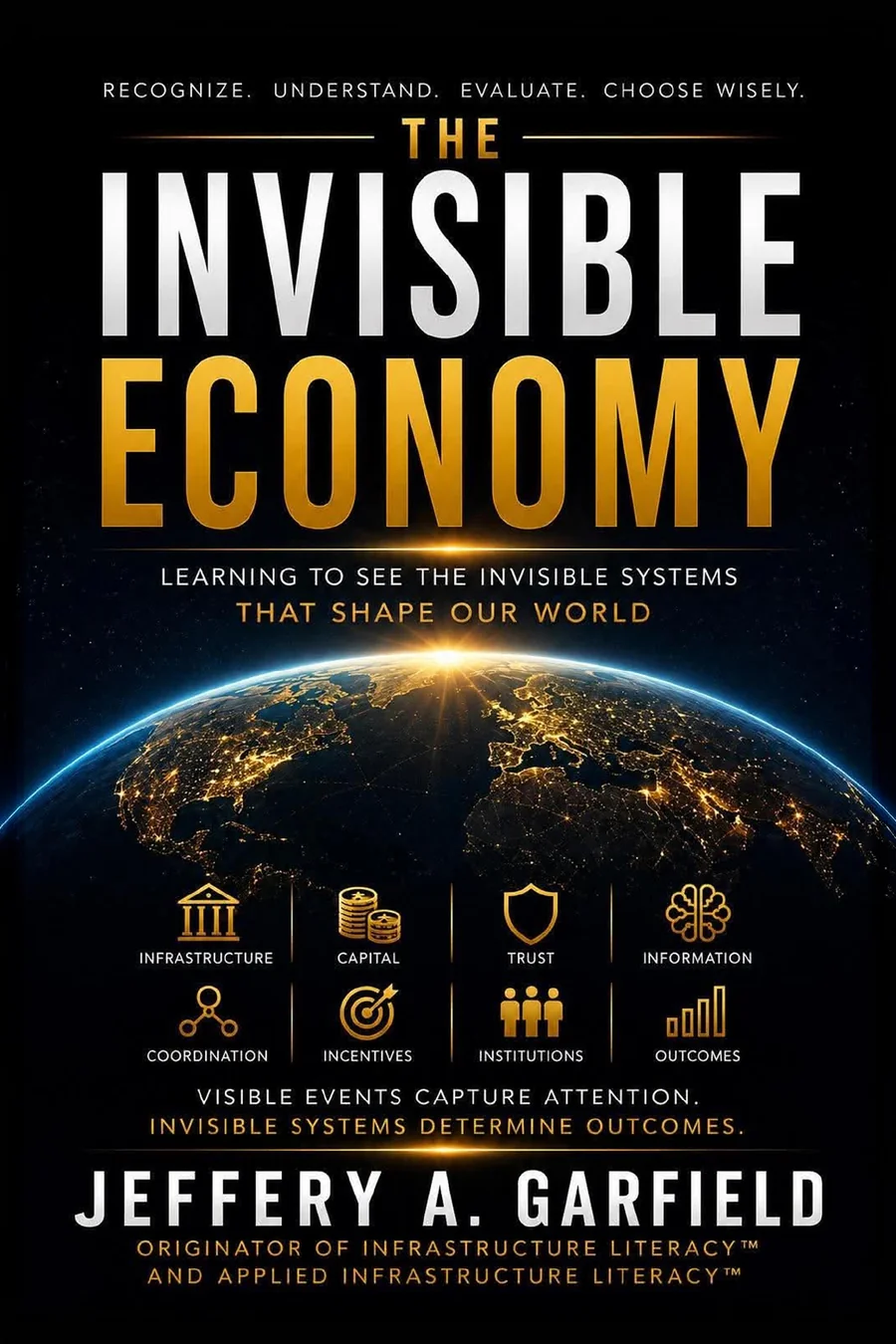
The Invisible Economy
Learning to See the Invisible Systems That Shape Our World
Explore the systems and relationships beneath visible outcomes—and the questions they raise for practical judgment.
Buy the book on Amazon U.S. ↗Is this book for me? →