Why Good Plans Need Operating Structure
Completion is not readiness: connecting a plan to authority, capability, dependencies, and evidence.
Executive perspective
A completed plan records an intention. Readiness asks whether people can carry out that intention under the conditions they will actually face. A useful review connects the written plan to decision authority, available capability, necessary handoffs, and evidence of performance.
This paper presents a practical review method through an illustrative operating example. It is a practitioner discussion, not an empirical study. Its aim is to make the next decision clearer.
The gap between a document and an operating system
Imagine a business preparing to introduce a new customer service. The launch plan is complete. Responsibilities have been assigned, a vendor has been selected, and the team has a target date.
During a rehearsal, staff discover that only one manager can resolve an exception. The vendor’s support hours do not cover the promised service hours. Nobody has tested how a failed transaction reaches the person responsible for correcting it.
These are hypothetical conditions, but they illustrate a useful distinction. A plan can describe the normal process while leaving the dependencies needed for an exception unresolved. Checking whether a document exists will not answer whether the service can operate reliably.
Three questions for readiness
Authority: may we do it?
Identify who may approve the action and the limits of that authority. Distinguish proposing, reviewing, approving, and performing. When an exception arises, people need to know who can decide and where the decision is recorded.
Capability: can we actually do it?
Examine whether people, time, information, resources, and systems are available together. A trained employee cannot complete a process without access to the necessary information. A functioning vendor service may still be unsuitable for the hours or workload being promised.
Evidence: can we prove it?
Choose evidence that addresses the claim. A signed contract demonstrates an agreement. A completed training record demonstrates participation in training. A successful rehearsal provides a different kind of evidence about performance under the conditions tested. Be precise about what each record establishes.
Follow one task from beginning to end
For the illustrative service, trace a customer request through acceptance, processing, confirmation, exception handling, and closure. At each handoff, ask what the next person needs, who supplies it, and how a failure becomes visible.
Include at least one difficult scenario. What happens if a key person is unavailable, information is incomplete, or the vendor cannot respond? The aim is to uncover a consequential gap while it can still be addressed.
Turn findings into decisions
- Name the gap. State the missing dependency or untested claim in plain language.
- Identify the consequence. Explain which commitment could fail and who would be affected.
- Assign an owner with appropriate authority. Responsibility should connect to the ability to act or escalate.
- Define the evidence needed. Decide what would demonstrate that the gap has been addressed.
- Record the decision and revisit it. Preserve the assumptions, remaining uncertainty, and reason for proceeding, changing scope, or waiting.
A proportionate decision
Readiness does not require pretending that every uncertainty has disappeared. It requires knowing which uncertainties remain, who owns them, and whether they are compatible with the commitment being made.
In the example, the business could revise service hours, establish an alternate decision-maker, or delay a feature until exception handling has been tested. The appropriate choice depends on the evidence and the consequence of failure.
A stronger plan links intention to execution. Completion is a milestone. Readiness is a judgment supported by evidence.
Continue with the book
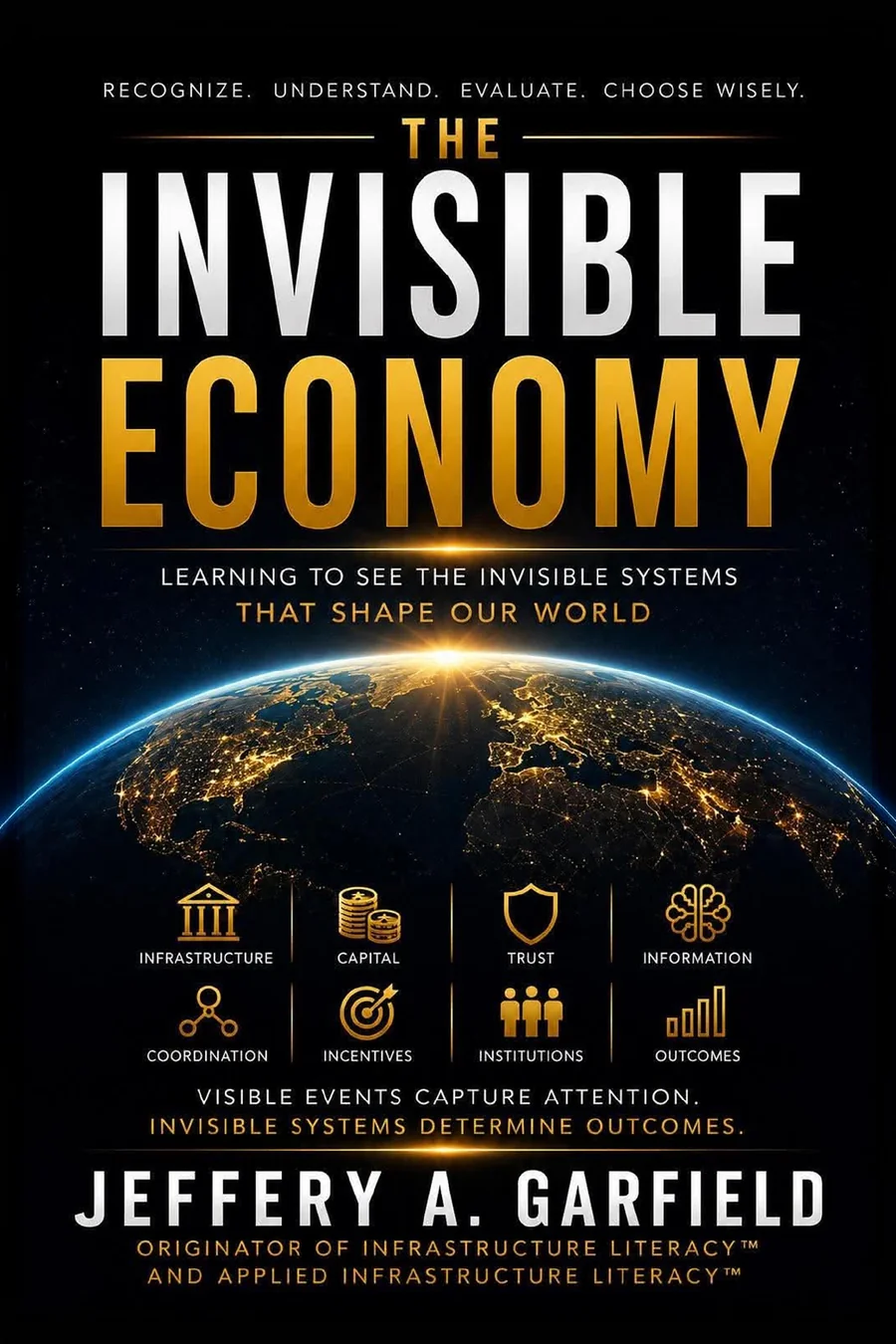
The Invisible Economy
Learning to See the Invisible Systems That Shape Our World
Explore the systems and relationships beneath visible outcomes—and the questions they raise for practical judgment.
Buy the book on Amazon U.S. ↗Is this book for me? →